
C1TE vs C2TE: which tile adhesive for which tile?
Walk into the adhesive aisle and you will see codes like C1TE and C2TE. They are not marketing — they are the EN 12004 European classification that tells you exactly how strong an adhesive is and where it belongs. Here is what they mean, and how to choose the right one for your tile.
What the letters actually mean
Under the EN 12004 standard, every cement-based tile adhesive carries a short code. Reading it left to right:
- C — Cementitious (a cement-based adhesive).
- 1 or 2 — the bond strength. Class 1 is a normal-strength adhesive; Class 2 is a high-strength (improved) adhesive that grips harder and resists water and stress better.
- T — no slip / non-sag, so tiles stay put on a wall instead of sliding down.
- E — extended open time, giving you longer to place tiles before the adhesive skins over.
So C1TE is a normal-strength, no-slip, extended-open-time adhesive, and C2TE is the high-strength version of the same.
C1TE — the everyday workhorse
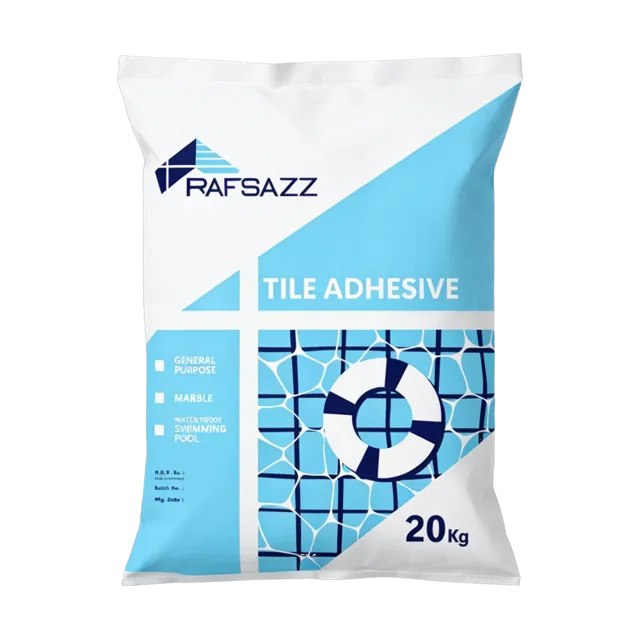
RAFSAZZ Tile Adhesive is a C1TE. It is the right choice for the majority of normal interior tiling: ceramic, vitrified and porcelain tiles on sound walls and floors, in dry and normal areas. It bonds reliably, holds tiles without slipping, and gives you time to work — at a sensible cost for everyday jobs.
C2TE — when the job is demanding
RAFSAZZ Marble Adhesive is a C2TE. The higher bond strength matters when the tile is heavy, the stone is sensitive, or the area is wet or stressed:
- Marble, granite and natural stone — heavy and, in the case of marble, prone to staining from weaker adhesives.
- Large-format tiles and slabs — more weight per tile needs a stronger grip.
- Wet and demanding areas — bathrooms, balconies and exteriors where water and temperature move the substrate.
For permanently submerged areas such as swimming pools, use the purpose-built RAFSAZZ Swimming Pool Adhesive, formulated to stay put under constant water.
Quick decision guide
| Your tile / area | Use |
| Ceramic / vitrified / porcelain, normal walls & floors | Tile Adhesive (C1TE) |
| Marble, granite, natural stone | Marble Adhesive (C2TE) |
| Large-format tiles & heavy slabs | Marble Adhesive (C2TE) |
| Swimming pools & permanently wet areas | Swimming Pool Adhesive |
When in doubt, going one class up rarely hurts the bond — it mainly costs a little more. Going one class under, on a demanding tile, is where failures start.
Why the class is worth trusting
A class only means something if the adhesive is actually made and tested to it. RAFSAZZ adhesives are produced to fixed formulations using imported German raw materials, and our adhesives are independently lab-tested and classified to EN 12004 — so a bag marked C1TE or C2TE performs to that class, batch after batch.
Frequently asked questions
What is the difference between C1 and C2 tile adhesive?
Which tile adhesive should I use for marble and granite?
Can I use C1TE adhesive for vitrified tiles?
What do the letters T and E mean in C1TE?
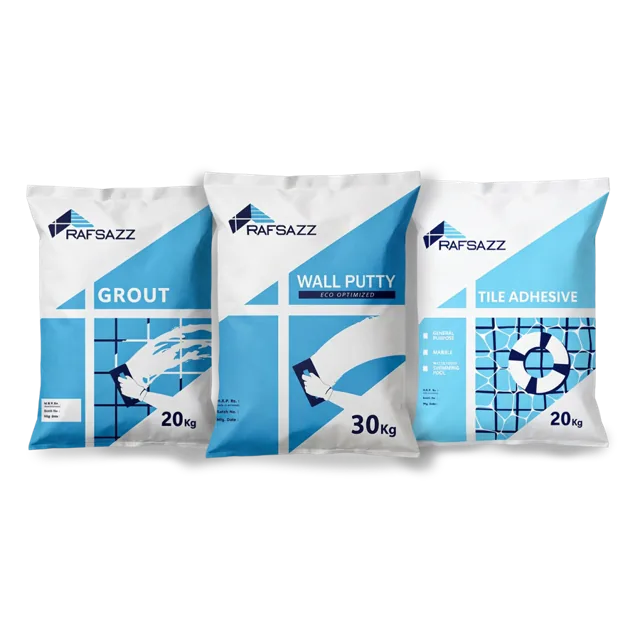
The RAFSAZZ products mentioned above
More guides
How much tile adhesive do I need?
Buy too little and the job stops halfway; buy too much and money sits on the shelf. This guide shows you how to estimate tile adhesive accurately — by…
Read guide →5 min readHow-toHow to apply wall putty, step by step
Wall putty is what gives a wall its smooth, hard, bright-white base before paint — and a good putty job makes cheaper paint look expensive, while a po…
Read guide →6 min read